A social concept designed around hot takes, friend-based trust, and playful interaction — helping people share what they think to explore differing opinions.

Overview
The core tension: people want to express bold takes, but mainstream feeds make disagreement feel public, permanent, and hostile. Spitfire reframes opinion-sharing as playful conversation built on trust.
Research

Community-driven forums with ranked discussions
x

Real-time public
updates and short posts
discord

Persistent group chat for structured communities
From analyzing social media posts, communities, and discussion boards, we found:
no. 1
Echo-chambers serve as spaces for identity.
no. 2
There’s a reinforcement of existing beliefs.
no. 3
Platform design influence echo-chambers.
Research
We created user personas based on target groups:
Rachel, 22

she/her
EE Major
Curious, Extroverted
Jamie, 19

he/him
Business Major
Observant, Introverted
conclusion
Rachel and Jamie, despite their differences, both need:
A safe space to communicate and understand others
A low-stakes way to engage in meaningful conversations
Research
Survey and interview responses pointed to the same pattern: people are open with friends, hesitant in public, and interested in lightweight ways to stay connected.
48 participants
Survey responses helped identify where people felt safe sharing opinions.
7 interviews
Moderator conversations clarified why public social posting feels risky.
Friend trust
Users were willing to discuss beliefs with friends when respect already existed.
Public hesitation
Strong opinions felt stressful on mainstream social platforms because strangers escalate quickly.
Real-time
connection
People liked lightweight updates from close friends they do not talk to every day.
research
Problem
Echo chambers reinforce bias, while toxic comment culture makes users afraid to post strong opinions.
Question
How might we build empathy and self-expression in a low-stakes, engaging, and fun way?
Approach
Start with trusted friends, then extend that empathy outward to strangers and their perspectives.
Iteration
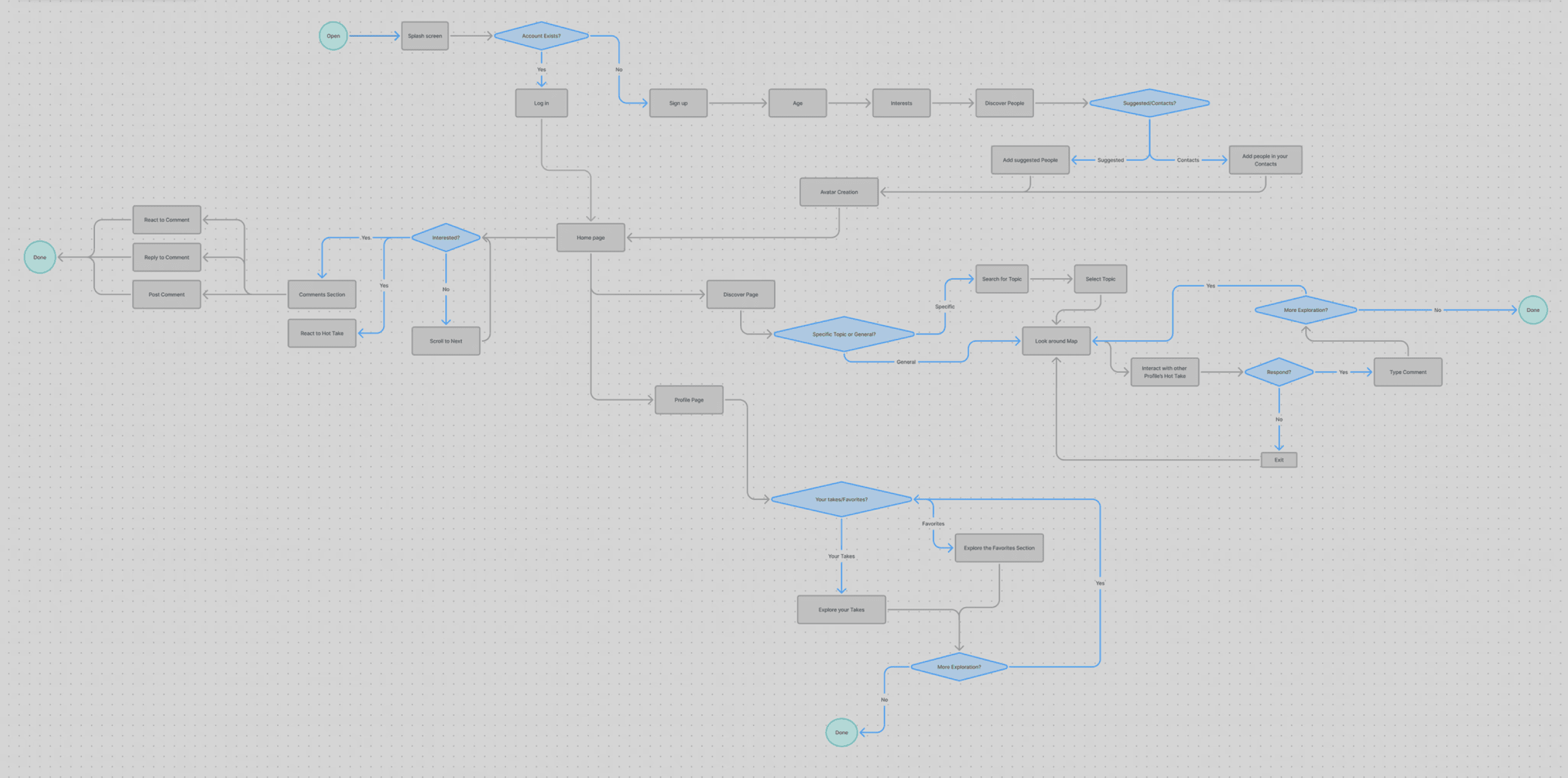
We translated the insights into a flow that moves from onboarding and identity creation into friend conversations, daily prompts, community discovery, and profile expression.
User flow
Mapped signup, avatar creation, home, profile, and community interactions around empathy-building goals.
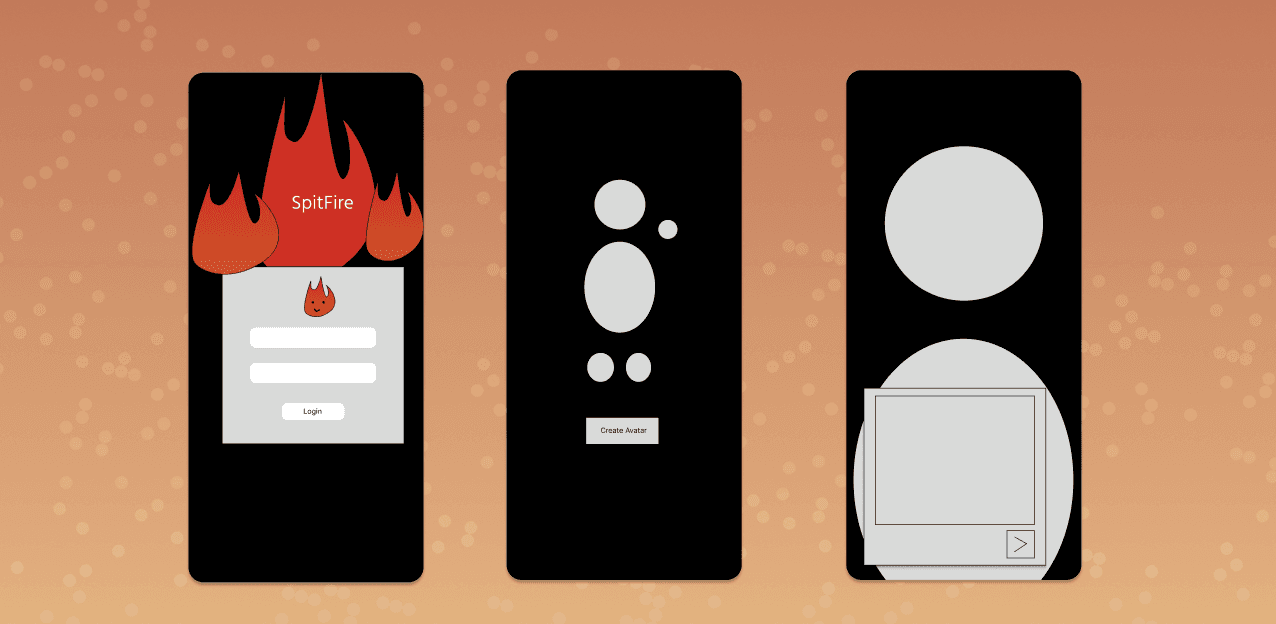
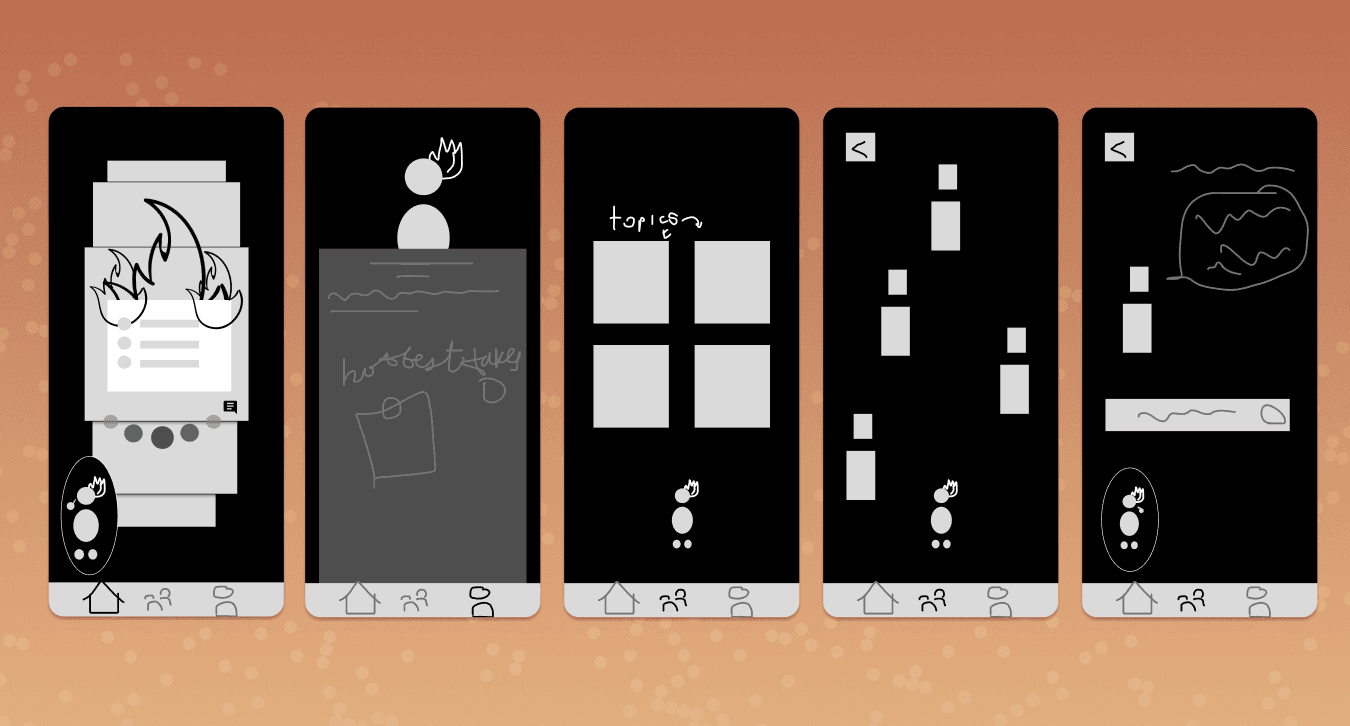
Lo-fi prototype
Used quick structure to test whether the concept made sense before visual polish.
Final Design
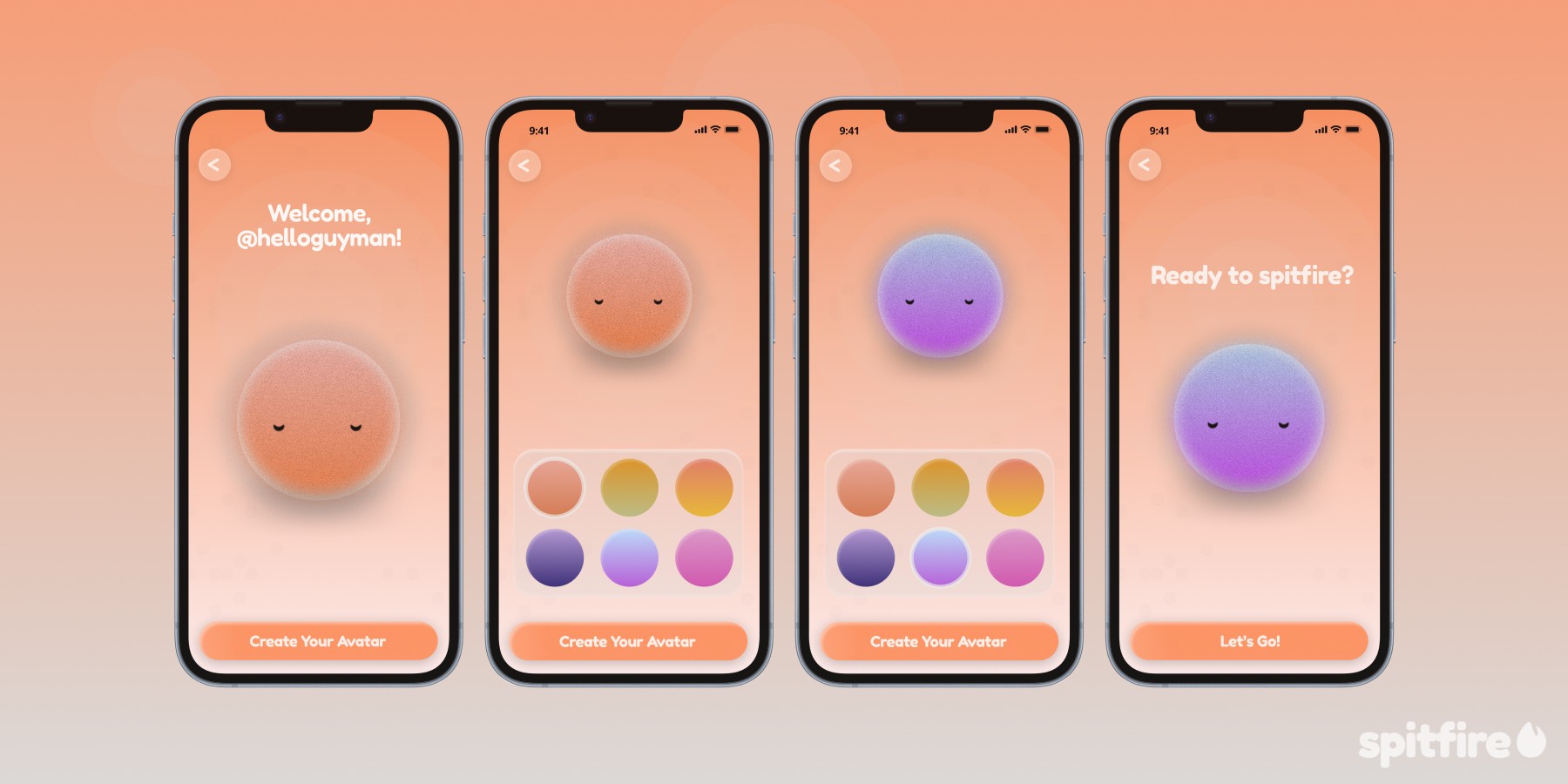
The final app uses soft curves, bold graphics, familiar social mechanics, and clear spaces for friends and discovery — balancing fun with emotional safety.
01
Goal
Make the product feel approachable before asking people to share strong opinions.
Choice
Used soft curves, bold graphics, and a clear onboarding path to create a lighter emotional tone.
Outcome
The first impression frames debate as playful conversation, not conflict.

02
Goal
Let users personalize themselves while keeping the experience lighthearted.
Choice
Added avatar creation as a playful extension of self-expression.
Outcome
Users can show personality without relying only on real-world identity cues.
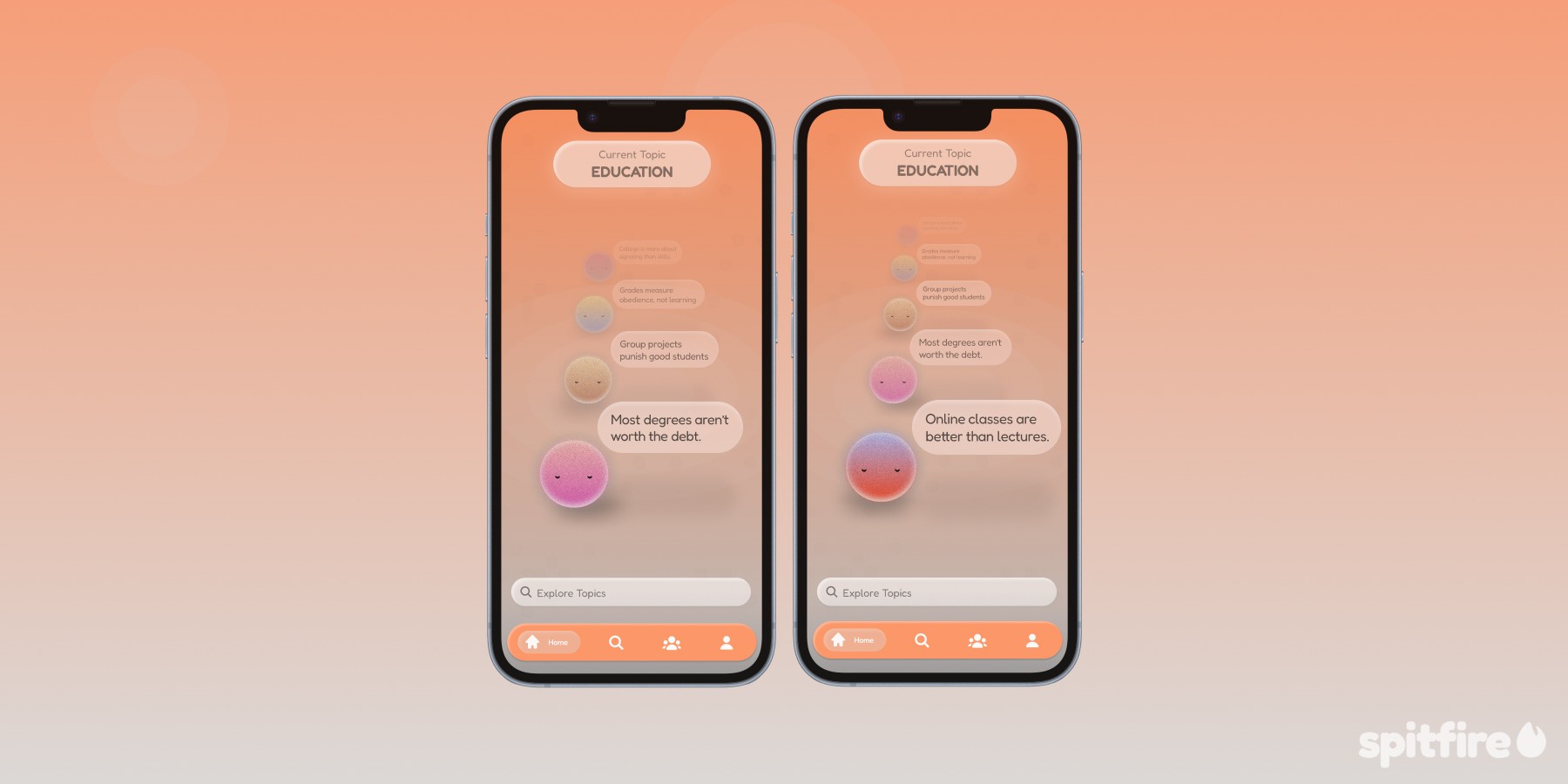
03
Goal
Make the core interaction instantly understandable and fun.
Choice
Used a Reel/TikTok-style scroll for friend posts, reactions, comments, and daily prompts.
Outcome
The interface lowers learning friction and encourages recurring lightweight engagement.

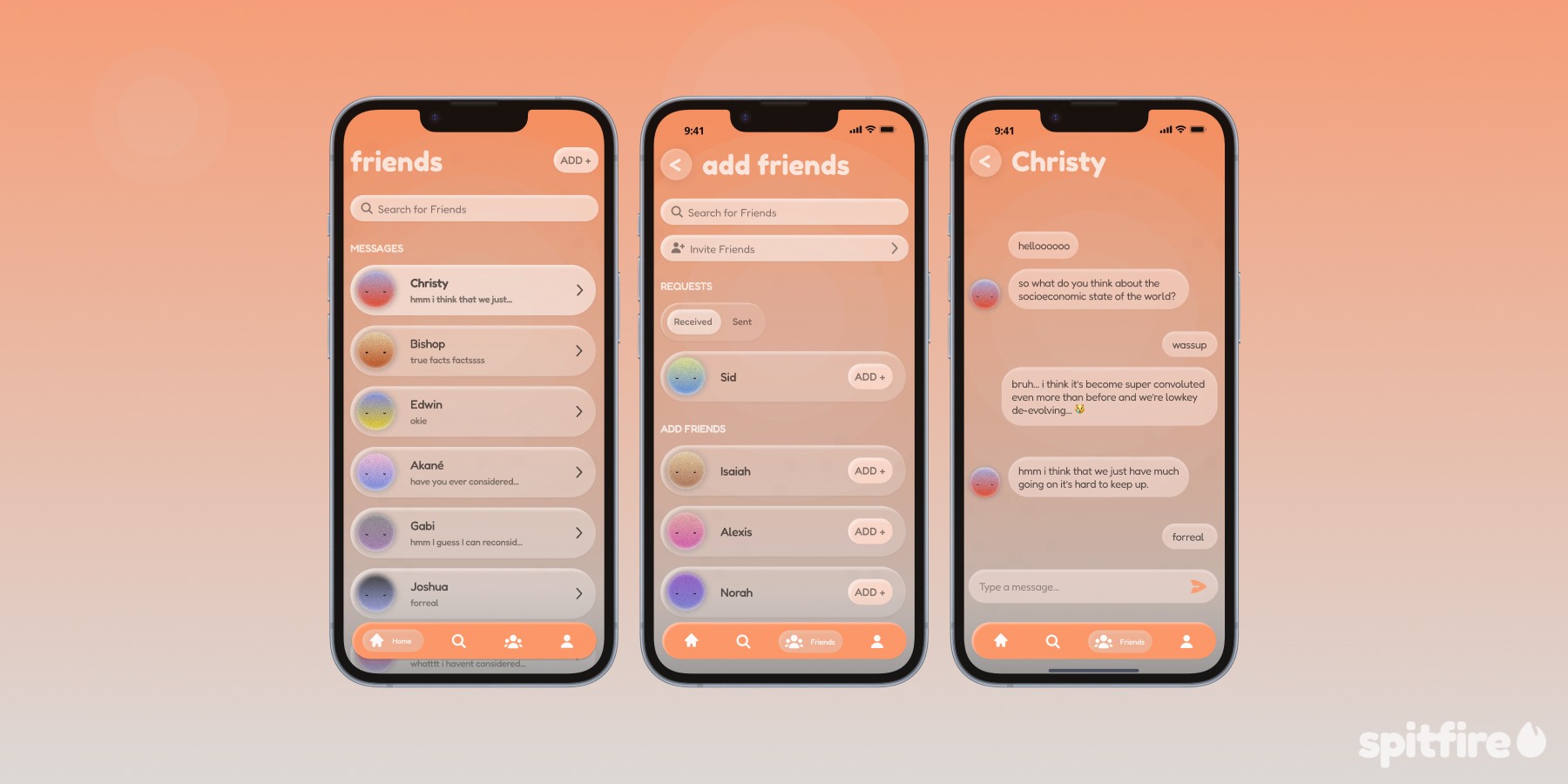
04
Goal
Support trusted conversations while still exposing users to different opinions.
Choice
Separated friend/group conversations from discovery, where other viewpoints can surface by topic.
Outcome
Spitfire creates a path from familiar empathy to broader perspective-taking.
05
Goal
Give users a place to own, pin, and revisit what they have shared.
Choice
Designed a profile for viewing and pinning favorite takes, visible when others explore a user.
Outcome
Opinions become part of a lightweight identity system without overwhelming the main feed.

Takeaways
This project showed how research, prototyping, and feedback can turn a broad social problem into a focused product story.
Prototype earlier
Mid-fi and hi-fi prototypes helped test interaction assumptions before the final visual system.
Interview deeply
Interviews gave the team language for the emotional risk behind posting opinions.
Test blind spots
Feedback revealed which interactions felt intuitive only to the design team.
